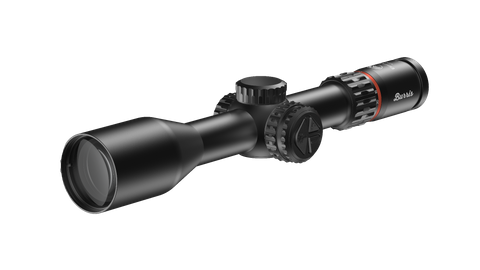
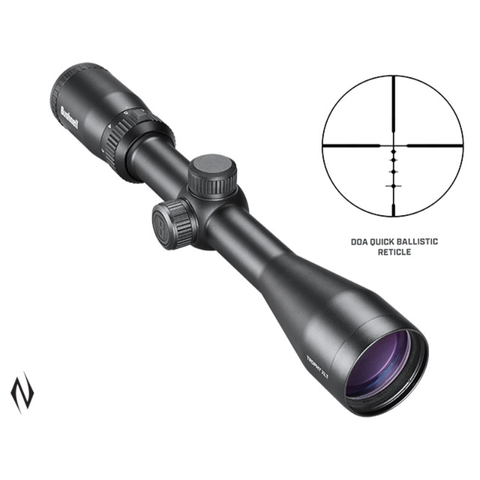
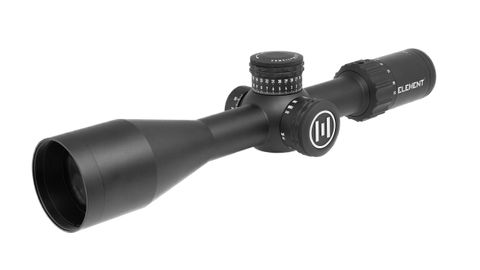
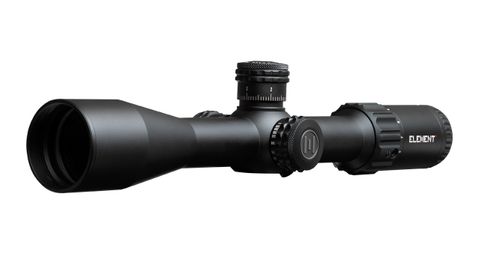
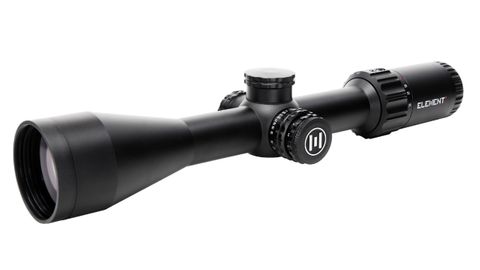
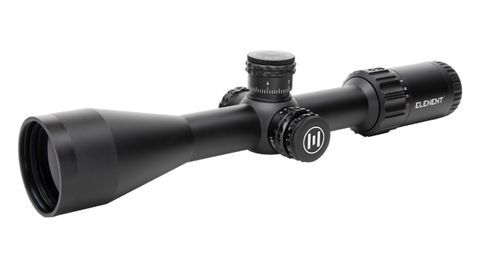
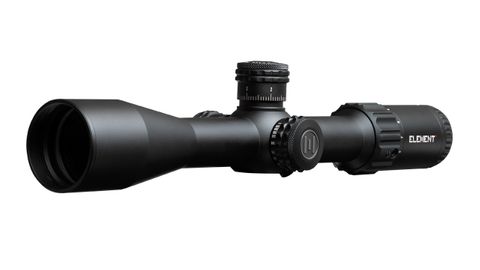
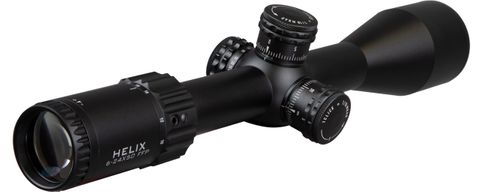
There are many aspects and factors you need to consider when picking the best rifle scopes. If you’re having trouble choosing the one that best suits your needs, we’re here to help. Here are a few pointers so you can get the right rifle scope that will best suit your needs.
MAGNIFICATION AND OBJECTIVE LENS
Rifle scope magnification is the most important factor in your rifle scopes. It determines how much closer the target is to be seen through it. It is called a “power” because it essentially gives your vision the power to magnify objects that you cannot see with your naked eye at the farthest distance.
When choosing a rifle scope magnification, it is important to remember what kind of shooting you'll be doing. If you're planning to use your rifle for long-range shooting, then having a good amount of magnification is a thing to consider - usually something like 4X or higher.
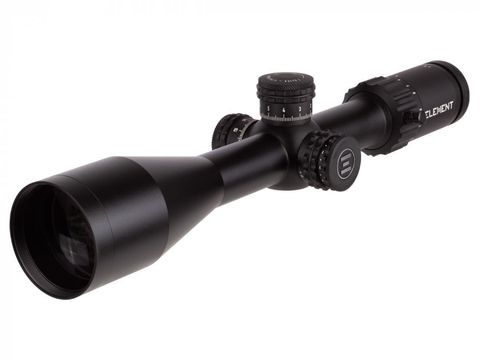
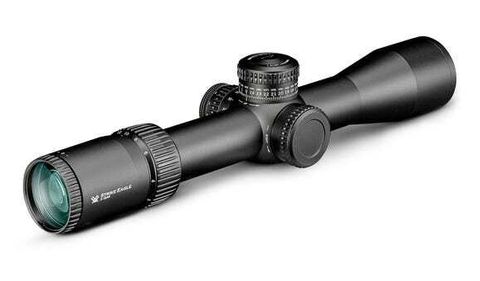
When you're looking through a rifle scope, the first number that appears on the tube is usually the power of magnification. For example, a scope with a 3-18X50 means that it can be adjusted from 3 to 18 times magnification. What does this mean?
3 is the scope’s magnification, meaning if the object appears 3 times closer than the naked eye, it will magnify the target three times.
18 is the highest magnification your scope will have. It can magnify your target 18 times closer than what you can see with your naked eye.
What does 50 mean? 50 refers to the diameter of the objective lens of the scopes in millimetres. It is located at the end of your scope and is responsible for getting and bringing the light into your rifle scopes for more visibility.
SCOPE RETICLES
For any target shooting or tactical usage, the reticle is an essential part of a rifle scope. It helps you to determine the accuracy of your aim, especially for long shots. This is the crosshair-like sight inside your rifle scope to help you align your gun to aim at your target.
Here are some of the well-known reticle types:
Duplex crosshairs. With wide crosshairs that get slightly thinner towards their ends. These reticles are great for hunting as this design allows for fast and accurate aiming.
A MIL-Dot reticle refers to a standard, specific pattern of duplex crosshair reticles with four small 0.25 mil diameter dots placed along each axis. These dots are arranged to allow for range estimation.
In short, a ballistic reticle is a scope reticle that includes multiple aiming points in the sight picture.
EYEPIECE LENSES
Though eyepiece lenses vary depending on each manufacturer, one thing they do universally is to bring light that has been focused by the objective lens into a clear image in your eye.
EYE RELIEF AND EXIT PUPIL
Eye relief is another important mechanical consideration you should take into account when choosing a rifle scope. This is a distance from the shooter’s eye to the rear lens (the eyepiece) that gives a full, clear view.
The longer the eye relief, the lower the risk of injury from recoil. Selecting the correct combination of base and ring set up for the scope and rifle, taking into account the individual shooter, is key to having a comfortable and safe rifle setup.
The exit pupil is the width of the beam of light leaving the eyepiece, usually measured in millimetres (mm). The larger the exit pupil, the brighter the image will be under low-light conditions.
SHOP A WIDE RANGE OF RIFLE SCOPES AT HORSLEY PARK GUN SHOP
Discover Horsley Park Gun Shop's extensive range of rifle scope products online from our popular rifle brands such as Burris, Bushnell Scopes, Flip-up, Gamo, Leica, Leupold, Swarovski, and more. Check out our latest hunting accessories, hunting binoculars and spotting scopes here.
Got questions? Contact us now!